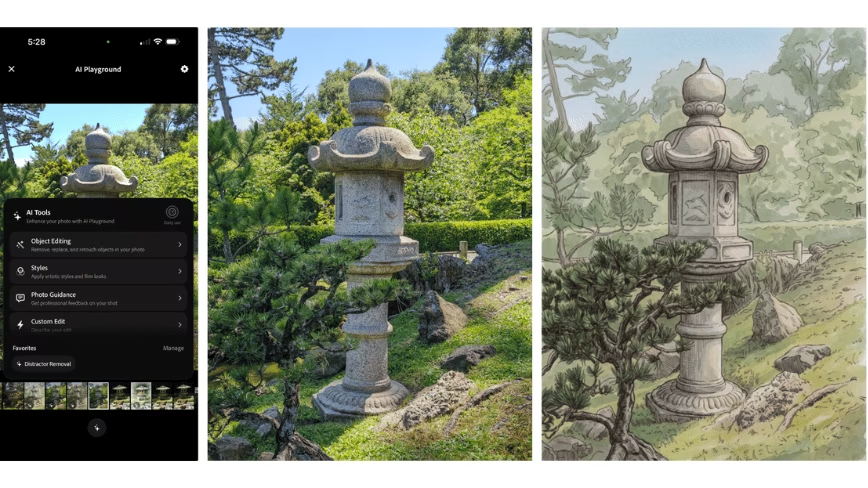
Adobe made its name here on restraint. Project Indigo, the experimental iPhone camera app it launched a year ago, sold photographers a natural, SLR-like look. It skipped the heavy processing that most phone cameras bake in by default.
The latest update points the other way. Version 1.1 adds a set of generative AI tools that can restyle a photo, strip objects out of it, and critique your composition. Adobe calls the bundle the AI Playground.
A camera app that grades your photos #
The most novel part is the critique. Press a button and a large language model reviews your shot, with a “professional” opinion on framing, lighting, colour, and emotional impact. A second button suggests how to reshoot or edit it.
The timing is the point. Because Indigo is a camera app, the advice arrives while you still stand in front of the scene. The man leading the project, Marc Levoy, explained the thinking in an announcement blog.
Levoy knows the territory. He built the computational photography behind Google’s Pixel cameras before joining Adobe, as TechCrunch notes. Google’s own Pixel “camera coach” offers vaguer framing tips. Indigo’s are more specific, and can teach you a trick even when you disagree.
Buttons, not prompts #
Levoy’s bigger argument is about control. Text prompts are an awkward way to edit an image, he says, because even a precise one is ambiguous. There are no sliders, so you throw the dice and try again.
His fix is buttons. The Playground has four sections, and most of the work is a tap on a toggle that fires a prompt Adobe has engineered for you. Object Editing strips out distractions, background people, vehicles, wires, fences, and clutter, then fills the gap. It works much like Google’s Magic Eraser.
Styles re-renders a shot as pen and ink, a colour wash, or golden-hour light. Custom Edit keeps a text box for anything the buttons miss. That freedom, TechCrunch noted, is also a potential road to “slopland.”
Powered by Google, not Adobe #
The surprise under the hood is the model. The tools run on Google’s Nano Banana, not Adobe’s own software, as The Verge points out. Adobe says it may swap in other models later, including its own Firefly system.
Nano Banana runs in the cloud, so the app needs a connection. Edits are capped at about 2K pixels to keep them quick. Trip the model’s safety filters too often, Digital Trends reports, and Adobe will drop you from the test.
There is a neat engineering touch too. Indigo shoots in high dynamic range, but Nano Banana returns flatter images. Adobe built a small model to boost them back, guided by your original photo.
Welcome to the ‘what is a photo’ debate #
“Welcome to the ‘what is a photo’ debate, Adobe,” The Verge wrote. It is a fair jab. An app praised for realism now rebuilds scenes and invents backgrounds, the same trick that lets other AI systems recreate a moment that never happened.
Adobe knows the risk. It plans to tag edited images through its Content Authenticity Initiative, and Nano Banana adds an invisible watermark. Even so, Levoy concedes that no feature can remove the need to behave responsibly.
The critique tool may be the quiet winner. It nudges people to look harder at a scene, rather than pump out more slop. The generative buttons, engineered as they are, still make that slop easier to make.
A short, deliberate test #
For now the Playground is free, with no sign-in. Only a few percent of Indigo users will see it, and only for a few weeks. Adobe’s Nextcam team has been blunt that it cannot offer it for free forever, so a paid tier may follow. What Adobe learns in those weeks matters more than the buttons. The company that promised photographers realism is now testing how far they will let a camera invent. That answer will shape more than one app.
Get the TNW newsletter #
Get the most important tech news in your inbox each week.