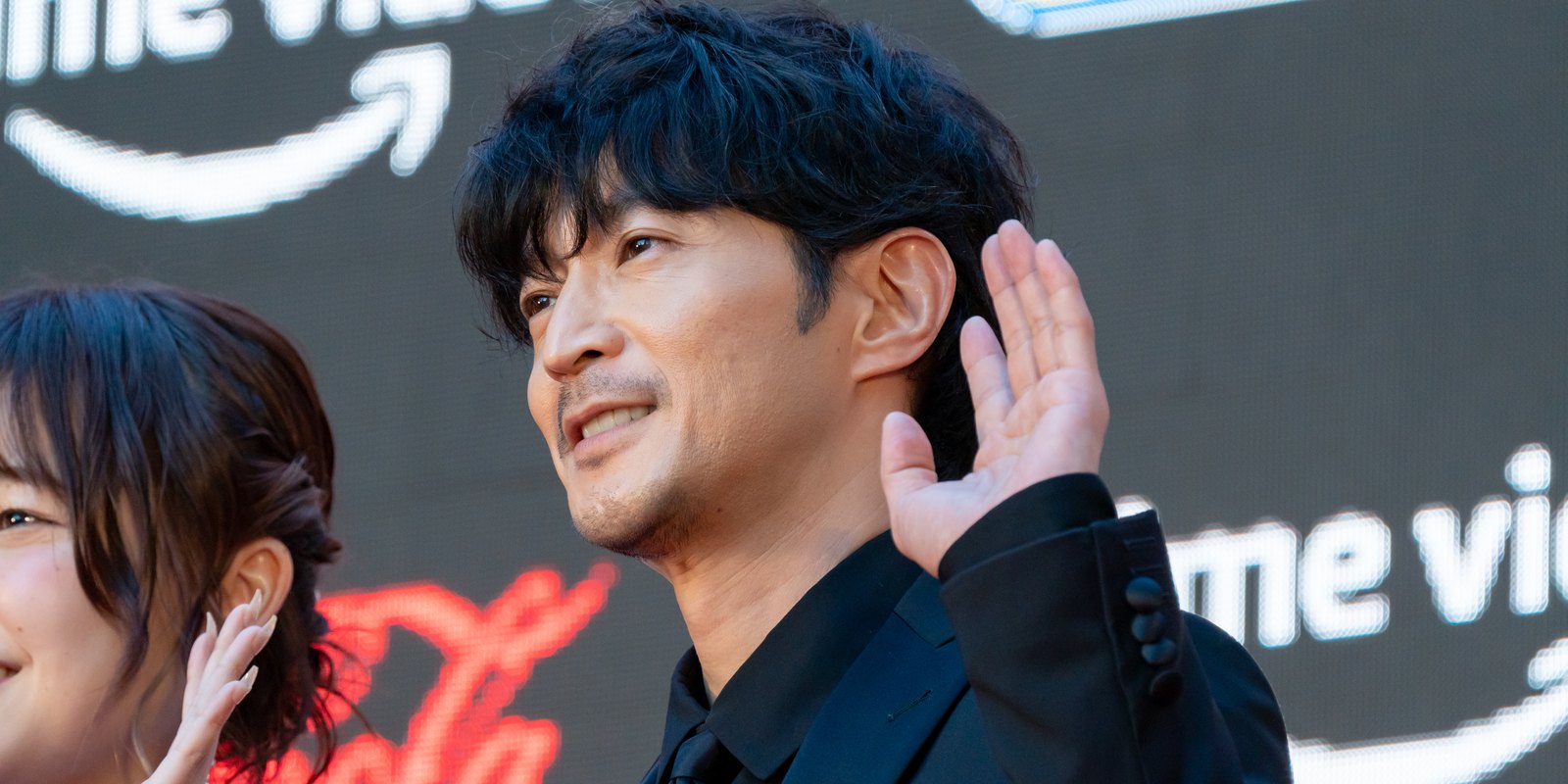
Kenjiro Tsuda on the red carpet at the Tokyo International Film Festival in 2023. Image: Dick Thomas Johnson / Wikimedia Commons, CC BY 2.0, cropped
.jpg)
One of Japan’s best-known voice actors has taken TikTok to court over videos he says used an AI copy of his voice, and a Tokyo court is due to rule on Wednesday. Kenjiro Tsuda, who voices characters in Jujutsu Kaisen and Yu-Gi-Oh!, brought what is believed to be Japan’s first lawsuit defending a person’s voice against AI clones, AFP reports.
What the case is about #
The videos came from an anonymous TikTok account whose profile picture looked like a Jujutsu Kaisen character Tsuda voices. They paired images with what appeared to be AI-generated narration about urban legends, the occult and conspiracy theories, in a deep voice Tsuda says can only be his.
According to the complaint, the account once had more than 200,000 subscribers and could have been earning upwards of 500,000 yen (about $3,200) a month. Tsuda’s lawyers argued it “only gained popularity because its dubious, sordid content was narrated by the attractive voice of a popular actor,” and that it infringed his publicity rights, the right to control and profit from your own identity.
The account is no longer viewable, so the Tokyo District Court will decide whether TikTok was responsible for taking the videos down.
TikTok says it’s a “generic male voice” #
TikTok’s defence, according to court records seen by AFP, is that the narration is a “generic male voice” and that any likeness to Tsuda is subjective. It also questioned the actor’s “national fame” and told the court it simply hosts “a forum where users could post creative and ingenious content within the scope of free speech.”
Japan has no law that explicitly protects a person’s voice. Last month, though, its justice ministry published non-binding guidelines saying a voice, as “the symbol of one’s personality,” is covered by existing publicity rights. Tatsuhiro Ueno, an intellectual property professor at Waseda University, told AFP it is “very unlikely” Tsuda will be denied those rights outright, and that the verdict “will garner a lot of international interest.”
“Our industry can be crushed” #
Japan’s voice actors, who can be as famous as the characters they play, are watching closely. Alongside the lawsuit, a group of them has launched a campaign called “No More” against using AI to copy performers without permission. Veteran actor Bin Shimada warned what a TikTok win could mean:
Our industry can be crushed.
Bin Shimada, voice actor, to AFP
Shimada said “unbridled” AI voice cloning could make younger actors “lose hope.” Yuko Sasaki, executive director of the Japan Actors Union, said the court should “acknowledge that ownership of a voice is a fundamental right.” Veteran actor Michihiro Ikemizu, 83, was more defiant:
You need to constantly feel and adapt while performing your role. That’s something AI can never do.
Michihiro Ikemizu, voice actor, to AFP
It’s the latest fight between creative workers and AI. This week, unsealed court filings showed OpenAI staff knew it was training its AI on pirated books, and the BBC’s new boss said he’d let AI present a programme. In 2024, OpenAI apologised to Scarlett Johansson over a ChatGPT voice that sounded like hers.
Why it matters #
AI can now copy a voice from a few minutes of audio, and most countries’ laws haven’t caught up. A ruling for Tsuda could make platforms responsible for removing voice clones in Japan, home of one of the world’s biggest animation industries, while a win for TikTok would leave performers with little protection.
Sources: AFP via Bangkok Post, The Japan Times.