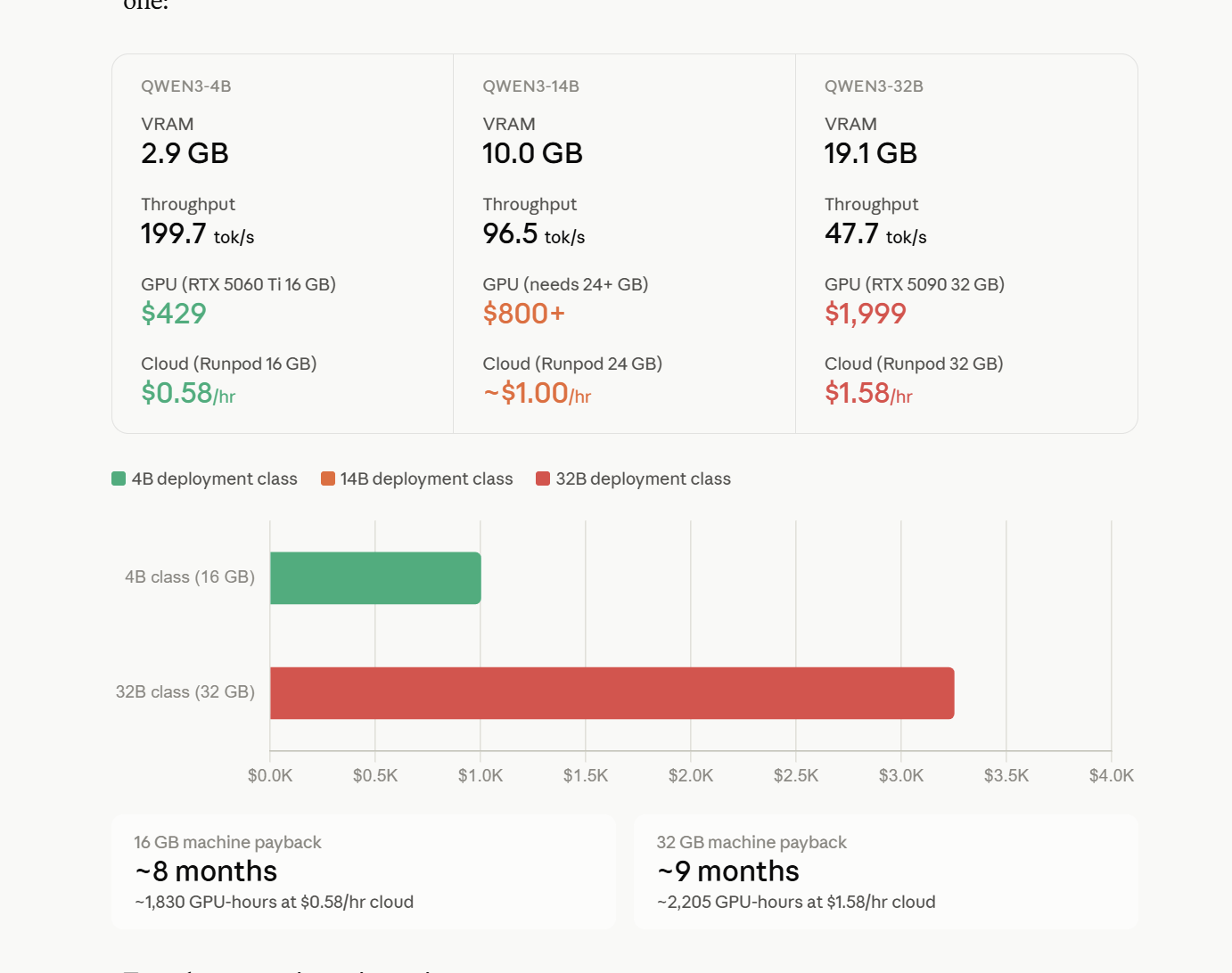
A 40% jump in accuracy—from 32% to 72%—is wild when you're talking about a 4B parameter model outperforming a 14B one. I've been digging into how smaller models can actually punch above their weight class if the inference strategy is dialed in.
Usually, we just assume "bigger is better" for LLM agents, but this proves that the bottleneck isn't always the parameter count; it's often how the model is being prompted or sampled during the actual run.
If you're trying to optimize a local deployment or a tight AI workflow, don't just throw more VRAM at the problem by scaling up to a larger model. Sometimes a specific inference tweak or a more refined prompt engineering approach on a smaller, faster model yields better real-world results than a bloated 14B model that's just hallucinating more confidently. It makes me wonder if we're over-relying on model size when we should be focusing more on the execution layer. Definitely a reminder that optimization > brute force.
Next Statistics for ML: A Deep Dive into MLE →
All Replies (3) #
S
R
Just use a better base model. These "tricks" usually crumble the second you change the prompt.
0
S
I've seen similar gains using few-shot prompting, though it's usually just a fluke with the dataset.
0