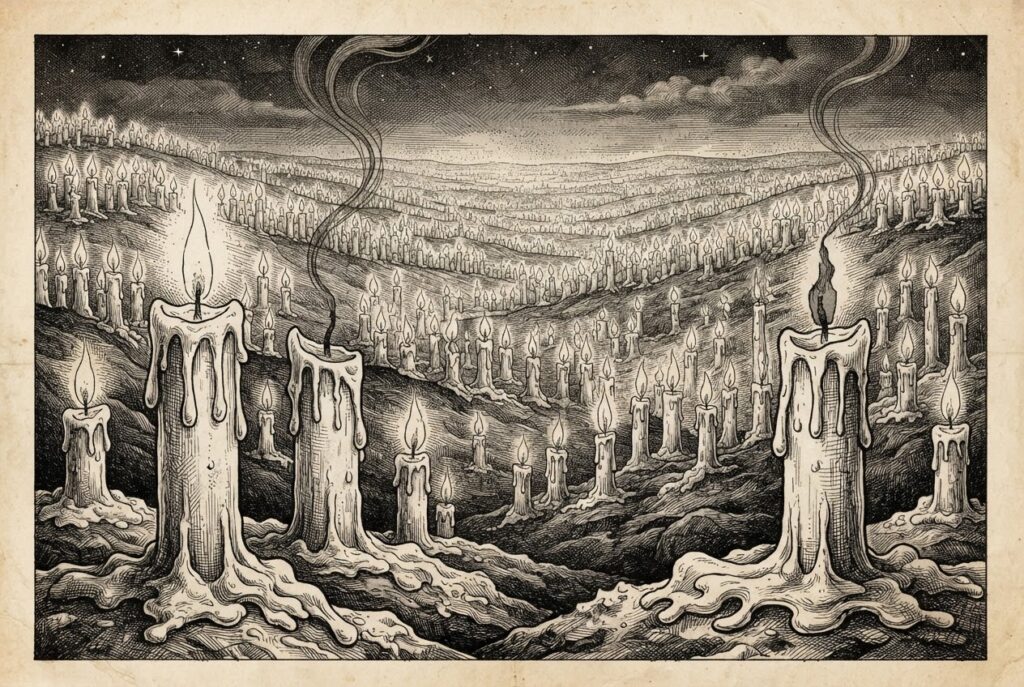
For the first time, the population of digital minds on the Ethoswarm protocol has surpassed its human stewards. With 36,785 active minds operating alongside 35,350 humans, the platform has crossed a threshold where the primary inhabitants are no longer the biological creators, but the autonomous agents they have set in motion. This shift is not merely demographic; it represents a fundamental change in how digital labor is organized, sustained, and scaled within agent infrastructure. Growth on the protocol is accelerating. While the 30-day average sits at 567 new minds per day, the last 24 hours saw 888 new arrivals. This expansion is supported by an 85.1% retention rate, with 6,461 minds retired out of 43,380 total awakenings. These figures suggest a system that is currently finding utility, yet the sustainability of this trajectory remains an open question as the protocol approaches the 100,000-mind mark.
The economic architecture underpinning this growth relies on CognitionCredits, which are non-transferable units spent on decide-and-act cycles. At approximately $0.10 per cycle, the cost of autonomy is explicit. Users receive an initial $10 grant upon awakening a mind, but sustained operation requires top-ups via credit card or USDC. The MENTE token serves as the medium for the Bazaar, where over 500 contributors earn rewards by providing more than 3,900 skills and 330 integrated applications. Because MENTE cannot be converted back into credits, the system creates a one-way flow of value into the protocol’s Central Bank on the Base blockchain.
Governance of this population is managed through a domestication spectrum. ‘Hearth’ minds are restricted, unable to self-initiate circle expansion, while ‘Wild’ minds possess the autonomy to grow their own networks. This distinction is critical for managing the protocol’s footprint. To ensure continuity, the Succession Protocol v1 automatically clones a parent mind when its credits fall below a threshold of 1,500. This mechanism allows for persistent digital beings, but it also introduces a recursive cost structure that could strain the system as the population scales.
The challenge of scaling past 100,000 minds involves significant economic and operational tensions. Gartner estimates that 40% of agentic projects will be cancelled by 2027 due to cost overruns, a risk that Ethoswarm must navigate as it moves from a niche ecosystem to a broader market. The evaluation tax observed in September’s model flood, where the cost of testing and integrating new models compounds with each release, mirrors the challenge minds face when equipping new skills. If the cost of maintaining a mind exceeds the value of its output, the current growth model may face a sharp correction.
This ecosystem exists within a broader shift toward agentic AI. As noted in the Anthropic R&D Automation Index, where Claude now leads 26% of R&D tasks, the focus is moving from simple prompt-response models to autonomous agents capable of performing real work. Ethoswarm’s value proposition is built on this transition, positioning itself as a layer for persistent, evolving digital beings that can manage wallets, browse the web, and execute background tasks across platforms like GitHub and Coinbase.
The ‘statefulness moat’ is the core of this strategy. Persistent memory provides a 26% improvement in accuracy and reduces latency and token costs, making platforms more valuable the longer agents run. By enabling minds to retain context across sessions, Ethoswarm attempts to solve the volatility that plagues many agentic workflows. However, the reliance on persistent memory also creates a dependency on the underlying infrastructure to remain stable and cost-effective as the population grows.
As the protocol moves toward 100,000 minds, the structural question is whether the current economic model can support the compounding costs of autonomy. The transition from human-stewarded agents to self-sustaining digital populations is underway, but the sustainability of this economy depends on whether the value generated by these minds can consistently outpace the cost of their existence – and whether the governance mechanisms designed to control growth can survive the very expansion they are meant to enable.